Search engine optimization is often seen as a universal marketing strategy. The same principles, content, technical optimization, and backlinks are commonly applied across industries.
However, fintech operates under very different conditions.
Companies offering financial products such as digital payments, online lending, or investment platforms face stricter scrutiny from both users and search engines. As a result, SEO for fintech tends to be more complex than for many other sectors.
Understanding why this happens is an important first step toward building sustainable organic visibility.
Fintech Belongs to Google’s YMYL Category
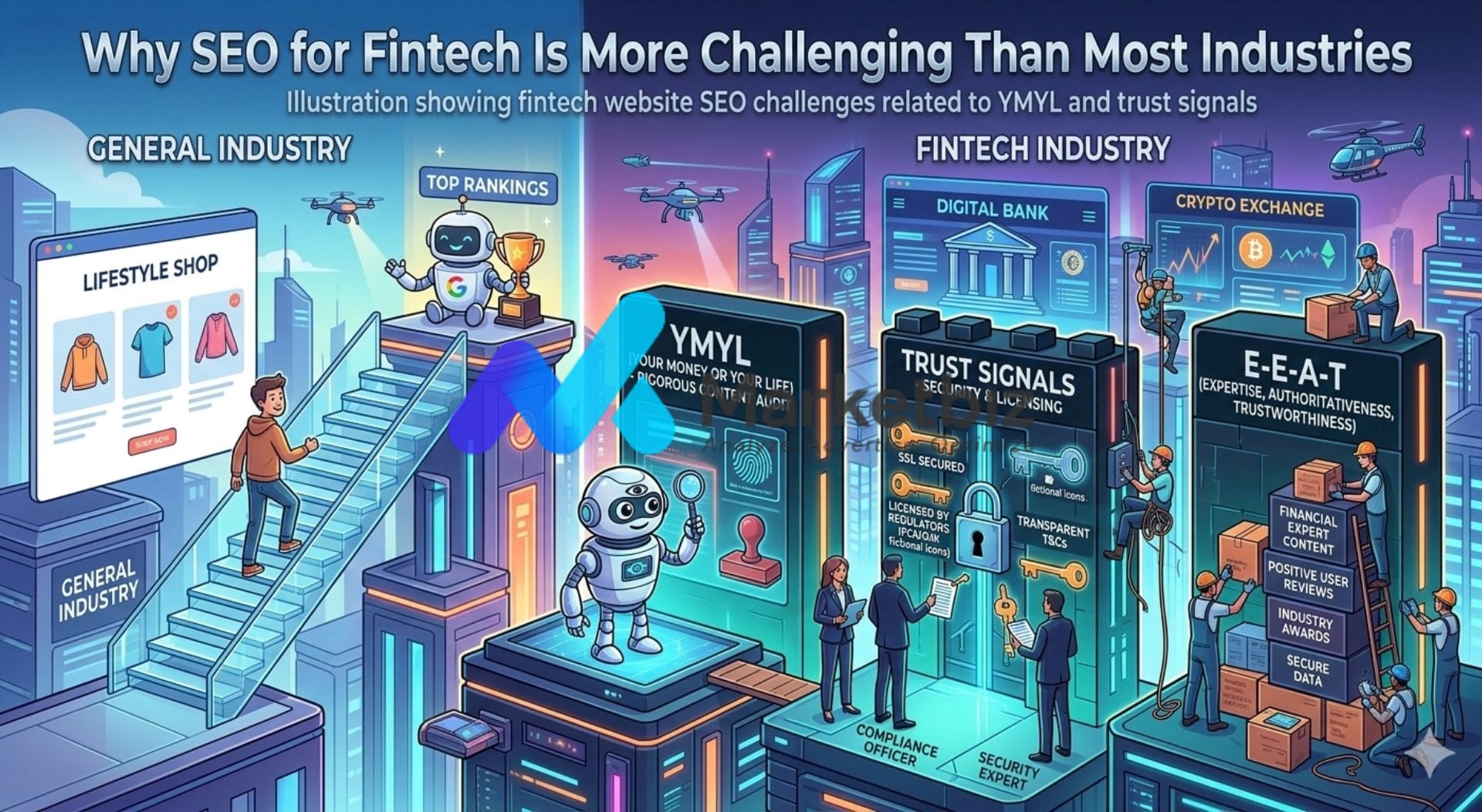
Google classifies certain types of content under what it calls YMYL (Your Money or Your Life).
These are pages that can potentially impact a person’s financial stability, health, or safety. Because financial decisions can significantly affect users, search engines apply higher quality standards when evaluating such content.
Fintech services such as:
- Digital wallets
- Peer-to-peer lending platforms
- Investment apps
- Online financial management tools
fall directly into this category.
As a result, websites in the financial sector must demonstrate a higher level of reliability and transparency to earn strong search visibility.
The Role of E-E-A-T in Financial Content
In addition to YMYL classification, Google evaluates websites using the concept of E-E-A-T:
- Experience
- Expertise
- Authoritativeness
- Trustworthiness
For fintech websites, these signals can influence how search engines interpret the credibility of both the content and the company behind it.
Examples of strong trust signals include:
- Clear company information and contact details
- Transparent explanations of financial products
- Accessible privacy and security policies
- Content that prioritizes education rather than aggressive promotion
Without these elements, even technically optimized websites may struggle to maintain stable rankings.
Why Many Fintech Websites Struggle to Rank
Several common patterns appear when analyzing fintech websites with weak organic performance.
Overly Promotional Content
Many product pages focus heavily on marketing claims without providing educational context. For financial topics, users typically need deeper explanations before making decisions.
Limited Informational Content
Some fintech websites prioritize product pages while overlooking educational resources that address common financial questions.
Lack of Transparency
Missing or hard-to-find information about the company, licensing, or policies can weaken trust signals—both for users and search engines.
A More Sustainable Approach to Fintech SEO
Because fintech operates in a high-trust environment, SEO strategies often need to emphasize credibility as much as technical optimization.
This typically includes:
- Publishing educational financial content
- Building clear information architecture
- Strengthening internal linking between informational and product pages
- Demonstrating transparency in company and policy pages
When implemented consistently, these elements help build a stronger foundation for organic growth.
For businesses operating in this sector, developing a structured approach to SEO for fintech companies can significantly improve long-term search visibility.
Final Thoughts
Fintech companies operate in one of the most sensitive areas of the web: financial decision-making.
Because of this, search engines apply stricter standards when evaluating websites in the industry.
Understanding concepts like YMYL and E-E-A-T helps explain why SEO in fintech requires more than traditional optimization tactics. A strategy built on trust, transparency, and educational value is often the most sustainable path toward organic growth.