Search results are changing.
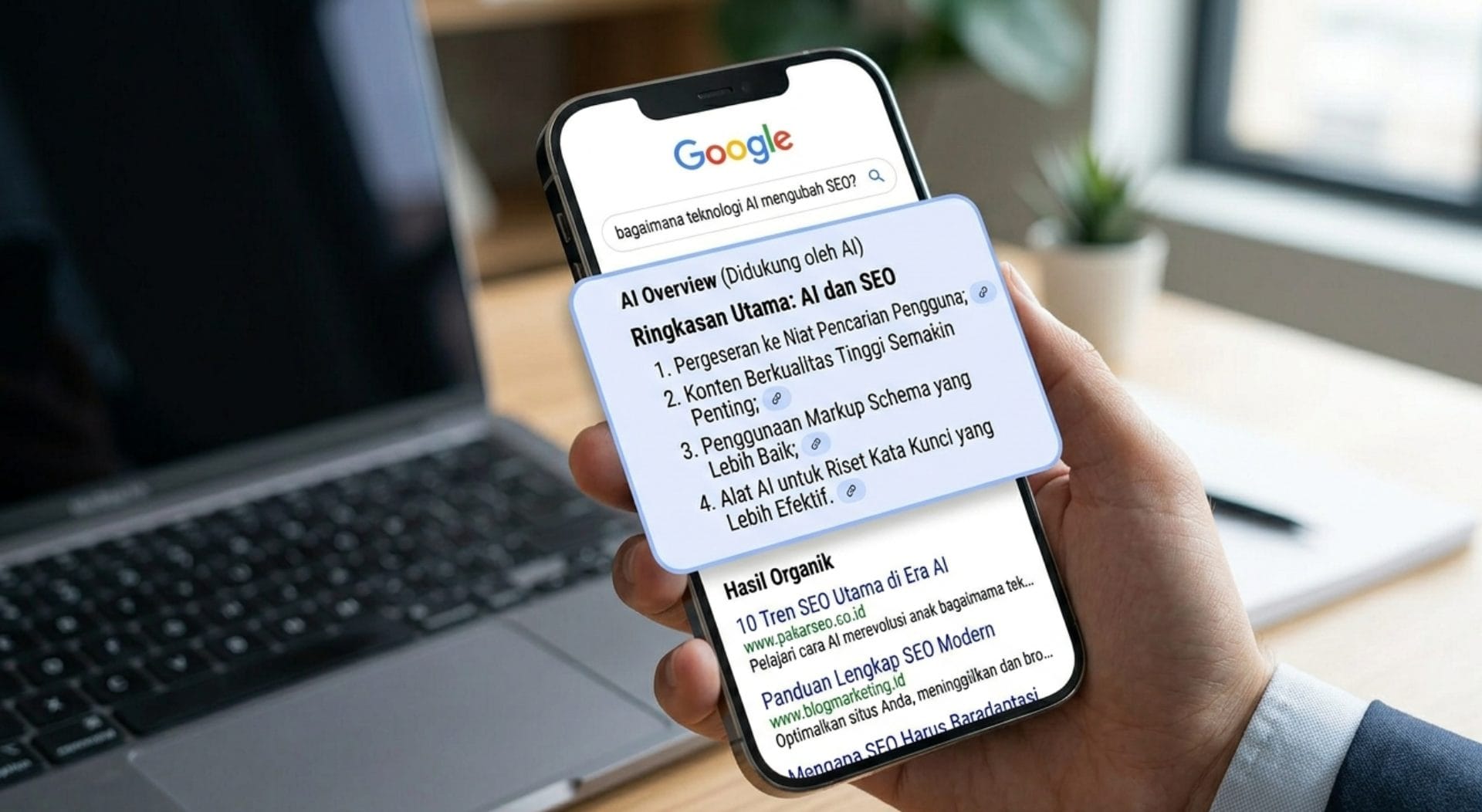
Instead of showing only a list of websites, Google now generates summarized answers through what is known as AI Overviews. In many cases, users can get the information they need without even clicking through to a website.
For many businesses, this raises a critical question:
Why doesn’t our website appear in AI Overviews—even when we rank on page one?
The answer has less to do with traditional SEO metrics, and more to do with how content is structured and understood by AI systems.
AI Overviews Are Not Just About Rankings
A common assumption is that top-ranking pages are automatically included in AI-generated summaries.
In reality, this is not always the case.
AI Overviews are built by selecting and combining information from multiple sources. Google prioritizes content that is:
- Clear and direct
- Contextually relevant
- Easy to extract and summarize
This means visibility is no longer determined solely by rankings, but by how well your content can be interpreted.
Your Content Doesn’t Provide Clear Answers
One of the most common issues is content that is long, but not clear.
Examples include:
- Key points buried deep within paragraphs
- Overly generic introductions
- No direct answer to the main question
AI systems tend to favor content that delivers:
- Concise explanations
- Direct responses
- Structured insights
If your content lacks these elements, it becomes harder for AI to extract usable information.
Weak Content Structure Limits Visibility
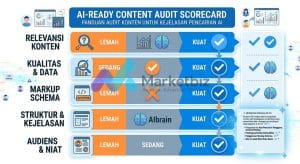
Structure plays a major role in how AI reads your website.
Common structural issues include:
- Missing or inconsistent headings
- Long, unstructured paragraphs
- Lack of bullet points or logical breakdowns
- Important information scattered across the page
Well-structured content, on the other hand, is easier to scan, interpret, and summarize.
Your Website Lacks Strong Topical Signals
AI systems don’t evaluate pages in isolation; they assess context across the entire website.
If your site:
- Covers too many unrelated topics
- Lacks clear content clusters
- Has weak connections between pages
Then your topical relevance becomes diluted.
This makes it harder for AI to identify your site as a reliable source for a specific subject.
A more structured approach to SEO for AI-driven search often focuses on strengthening these connections across content and pages.
Keyword Optimization Alone Is No Longer Enough
Traditional SEO often emphasizes:
- Keyword density
- Content length
- Exact-match targeting
But in AI-driven search environments, what matters more is:
- Clarity of meaning
- Contextual relevance
- Logical content relationships
Content written purely for keywords without clear intent often struggles to appear in AI-generated results.
AI Looks for Answers, Not Just Pages
This is the fundamental shift.
Search engines are no longer just ranking pages.
They are extracting answers.
If your content does not present information in a way that can be easily understood and reused, it is less likely to be featured.
Conclusion
Not appearing in AI Overviews does not mean your SEO strategy is failing.
In many cases, the issue lies in:
- How content is structured
- How clearly answers are presented
- How topics are connected across the site
In an AI-driven search environment, visibility depends not only on ranking but on how well your content can be interpreted and utilized.
The question now is:
Does your content clearly answer what users are searching for?
Is your structure easy to understand not just for users, but for AI systems?
Or is your content still difficult to interpret in a search environment that increasingly relies on machine understanding?
In many cases, the difference is not about who publishes more content but who communicates more clearly.